IGLF Youth Centre fosters for connection and belonging
Located in Edmonton, the IGLF Youth Centre is a vibrant, community-focused environment created to foster connection, creativity, and belonging. The 5,637 sq.ft. space supports a wide range of youth experiences, from collaboration and learning to social engagement and quiet reflection within a cohesive and welcoming design framework.
Through a layered material palette of textured neutrals and strategic pops of colour, the centre balances durability with warmth. The result is an energetic yet grounded environment that reflects the diversity and individuality of the youth it serves while maintaining a unified architectural identity.
Holly Mark
Margarette Cruz
Project Start Date: February 2025
Project Completion Date: September 2025
Square Footage: 5637 sq. ft.
The Challenge
Designing for Diverse Needs: The IGLF Youth Centre needed to meaningfully support a wide range of users within a compact footprint. Serving youth of varying ages, personalities, and comfort levels, the space had to accommodate high-energy collaboration, learning, and social interaction while also providing opportunities for quiet reflection and retreat. Achieving this balance required thoughtful spatial planning to ensure multiple activities could occur simultaneously without feeling fragmented or overstimulating.
Balancing Playfulness with Longevity: The client envisioned a vibrant, youth-driven environment that celebrated creativity and identity. At the same time, the design needed to remain adaptable, durable, and timeless enough to serve the community over the long term. Integrating bold colours and dynamic forms in a controlled, intentional way ensured the space feels energetic and expressive without becoming overly themed or temporary.
The Solution
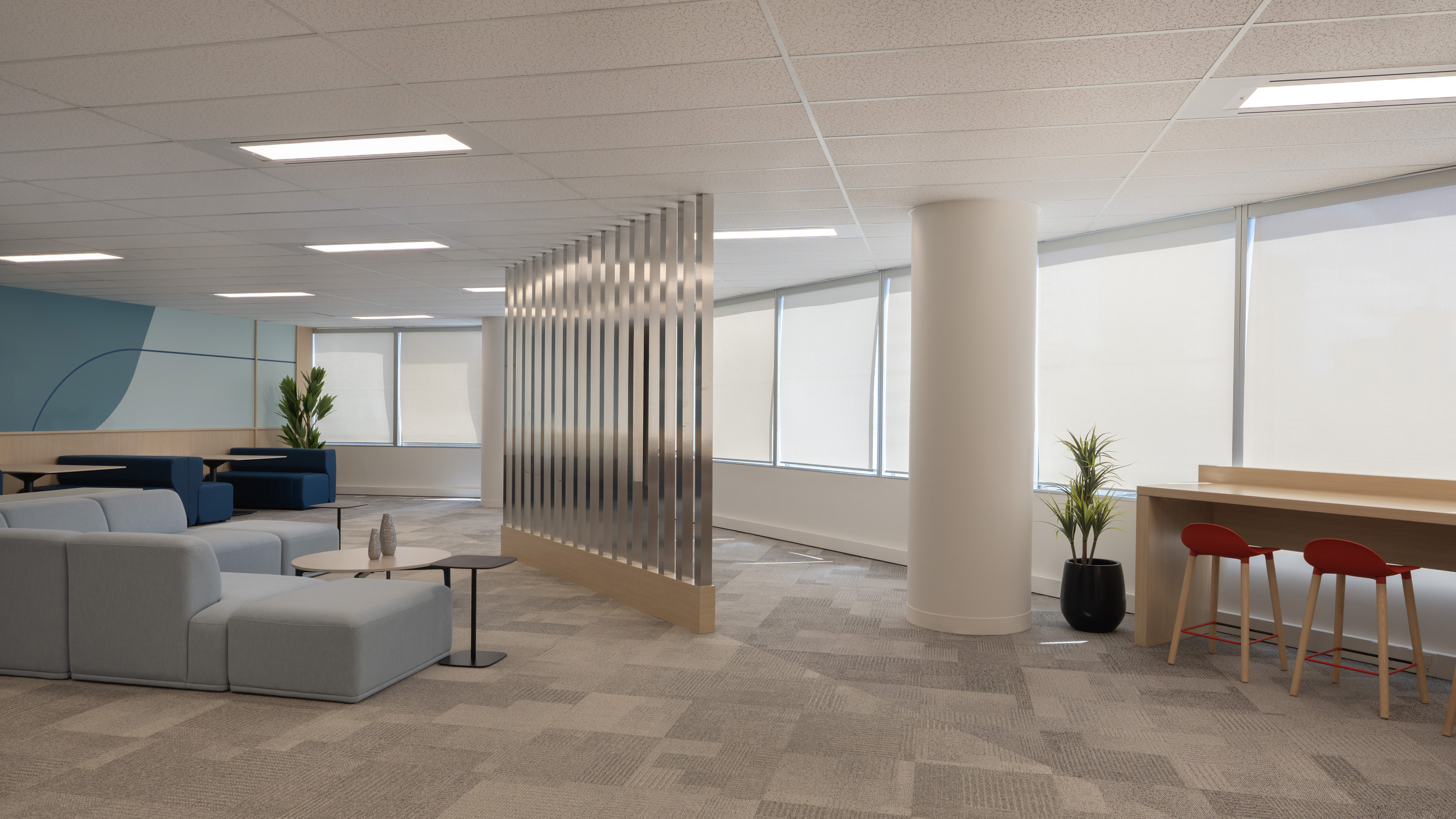
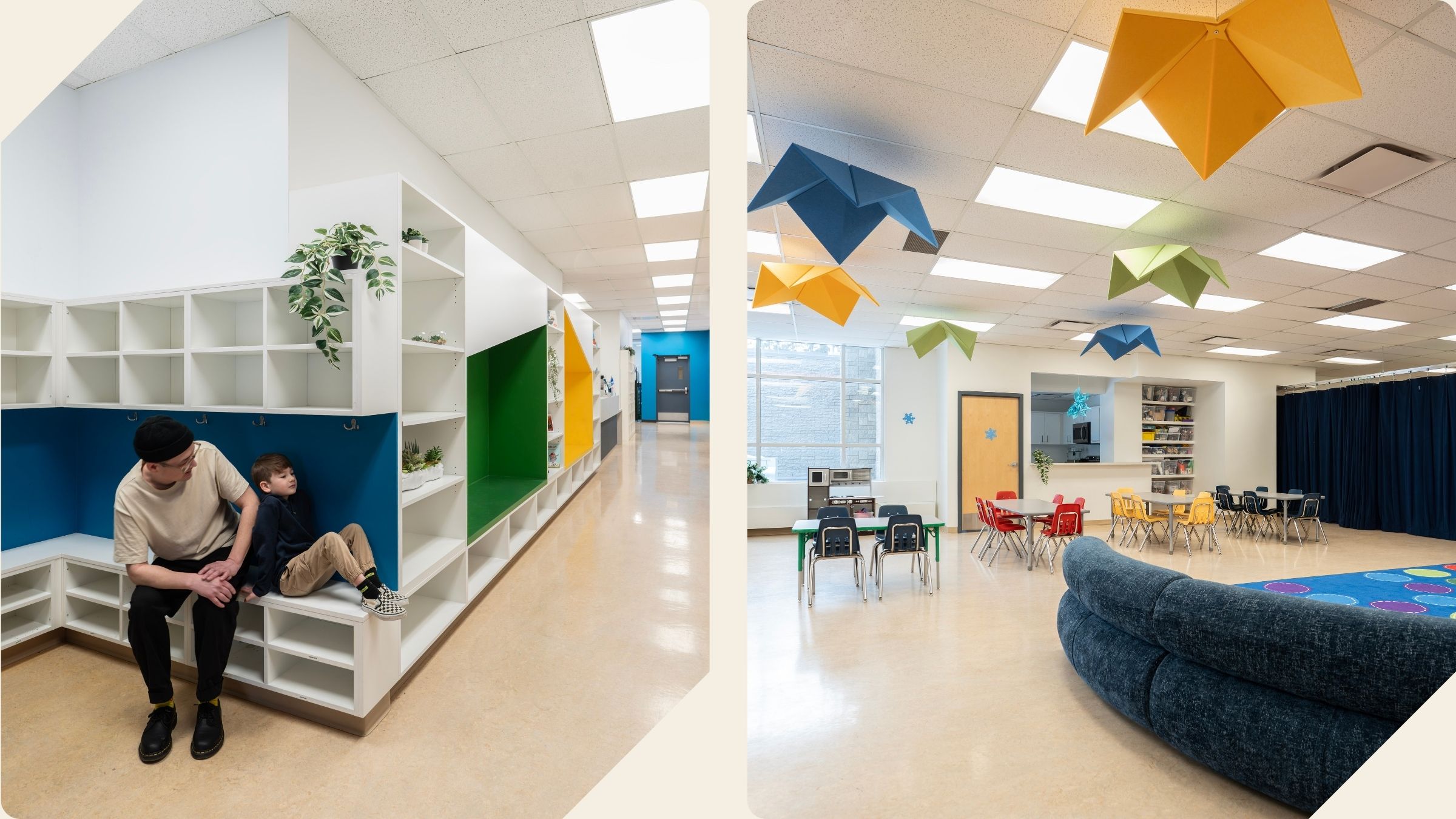
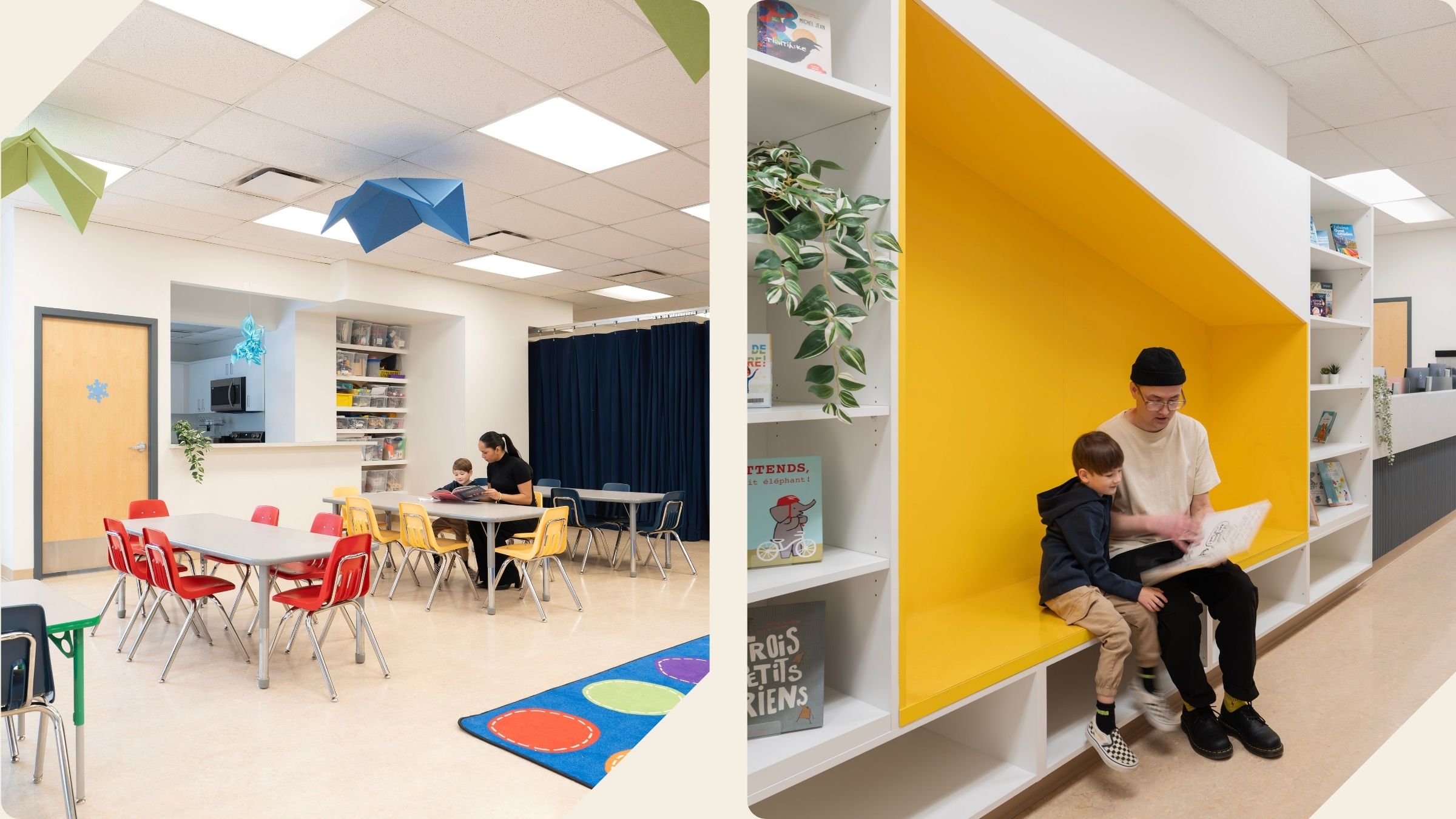
Layered Colour Strategy and Cohesive Zoning: A carefully considered colour strategy introduced vibrant accents, including yellow, blue, green, and red — grounded by textured neutral finishes. Rather than overwhelming the environment, colour is used intentionally to energize key areas while maintaining visual harmony across the centre. Strategic zoning reinforces functionality without relying on rigid physical barriers. Subtle spatial transitions and colour cues help differentiate areas for collaboration, learning, and quiet retreat, allowing diverse activities to coexist within a unified architectural framework.
Durable Design with Warmth and Adaptability: To ensure longevity, the design incorporates commercial-grade finishes, resilient flooring systems, and practical millwork solutions capable of withstanding heavy daily use. Materials were selected not only for durability but also for their tactile quality and warmth, ensuring the space feels welcoming rather than institutional. Integrated built-in seating and framed niches create moments of pause and connection, supporting both social interaction and individual reflection. The result is a flexible, youth-centred environment that balances energy with comfort and is designed to evolve alongside the community it serves.
The Human-Centred Lens
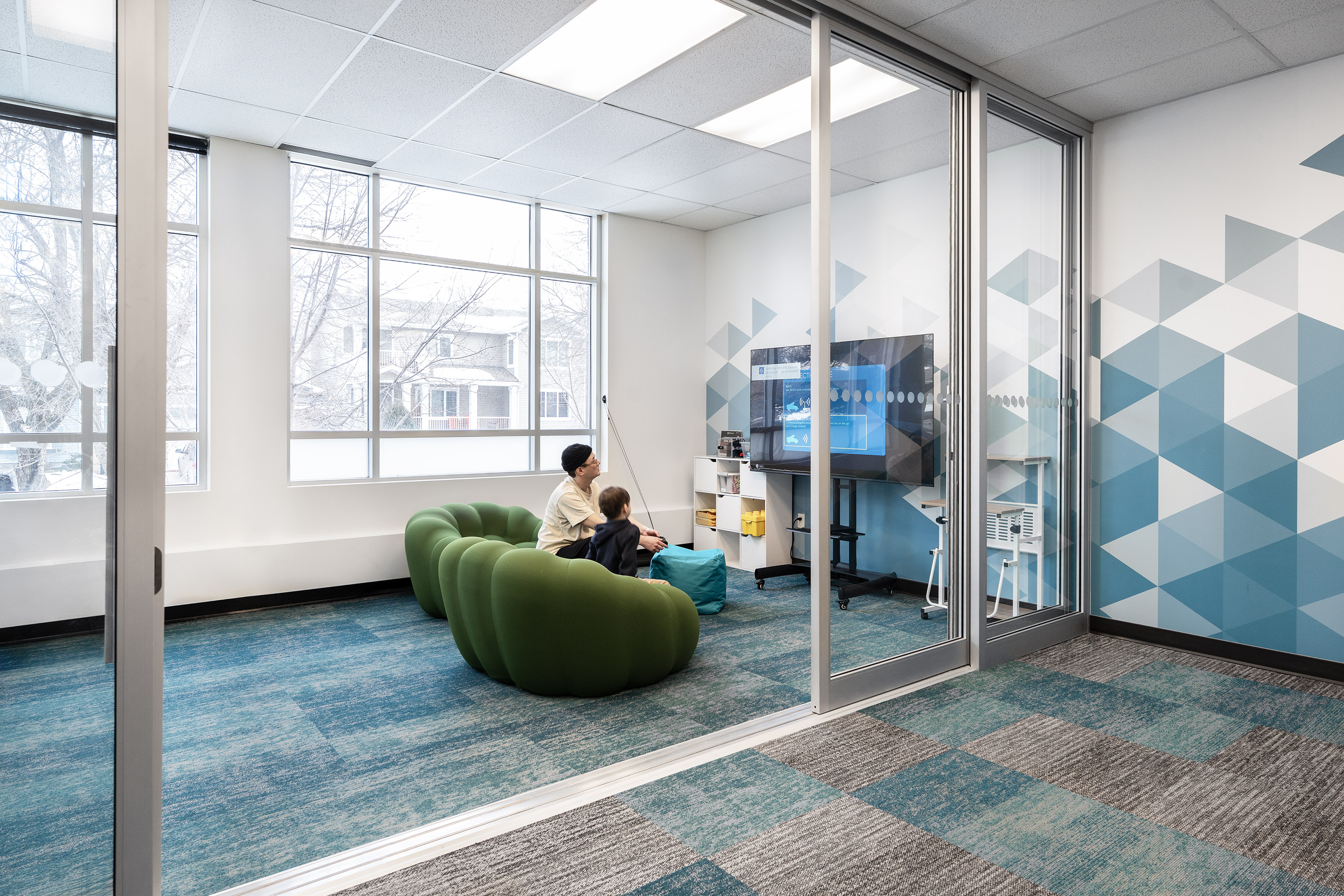
Framed and built-in seating zones: The design of the IGLF Youth Centre draws inspiration from hospitality, residential, and wellness environments to create a space that feels welcoming rather than institutional. Framed seating zones and built-in nooks offer moments of comfort and retreat, encouraging youth to gather in ways that feel natural and unforced. These elements soften the overall environment and foster a sense of belonging, reinforcing the centre’s role as a safe and supportive community hub.
Colour Theory through playful wall murals: Colour theory plays a significant role in shaping emotional experience. Playful wall murals and carefully selected accent tones energize collaborative areas while quieter zones are grounded in neutral palettes to support focus and reflection. The layout prioritizes visibility and openness to promote safety and connection, while subtle spatial transitions allow youth to choose how they engage, whether socially, creatively, or independently. The result is an environment that acknowledges diverse needs and empowers users to move through the space with comfort and confidence.


Key Features
Colour Zoning Strategy
Colour plays a functional role in the space, helping define age-specific zones and activity types without relying on physical barriers. Vibrant accent colours are strategically placed to energize gathering areas, while textured neutrals maintain visual cohesion. This approach allows each zone to feel distinct while remaining part of a unified environment.
Geometric Repetition
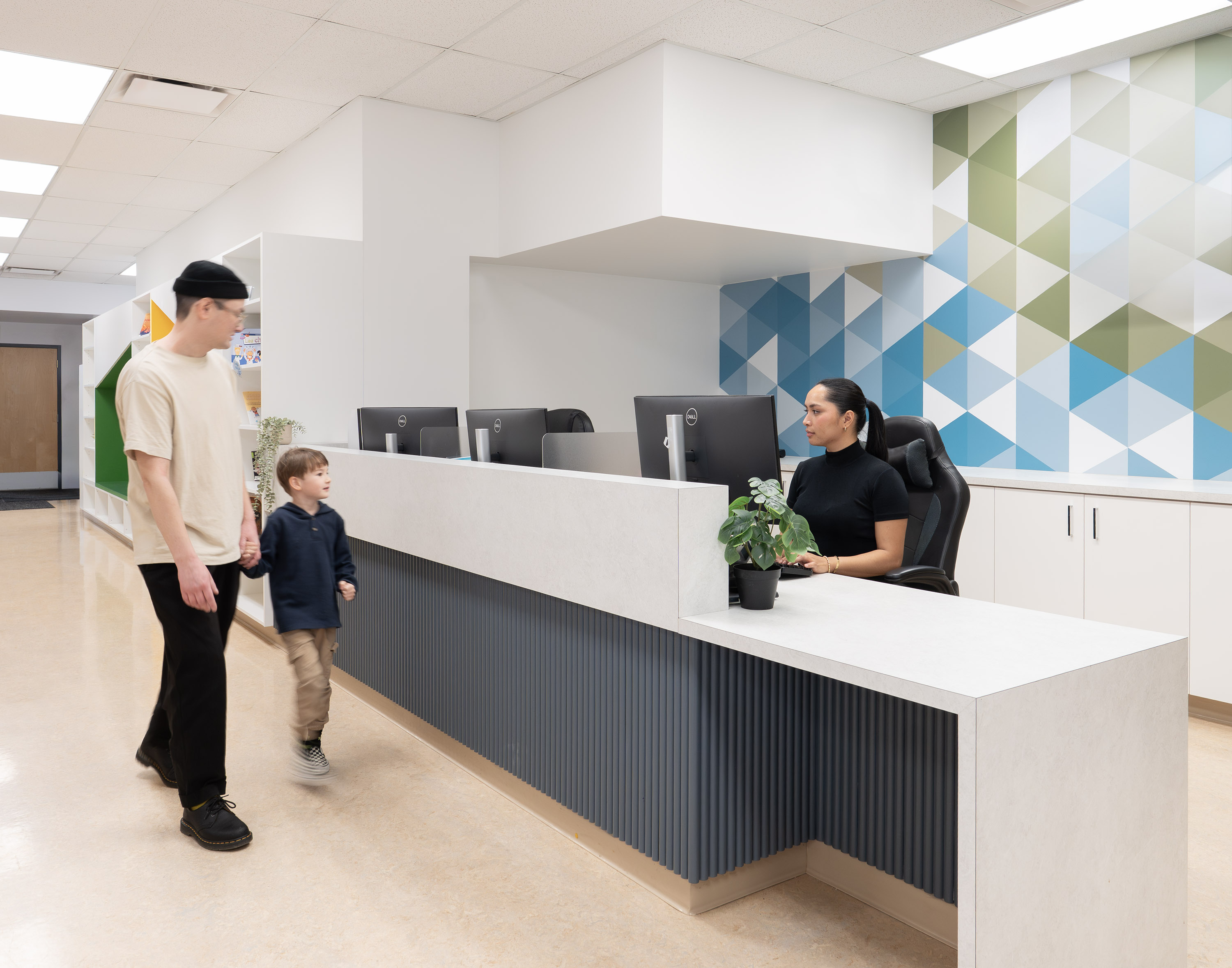
Angular built-in forms and repeated geometric lines create a strong visual identity throughout the centre. Framed seating niches, millwork details, and architectural cut-ins provide both structure and moments of intimacy, reinforcing cohesion while supporting diverse user experiences.
Results
Project Credits
Contractor: Velcor Construction
Project Lead: Holly Mark, Jessie Silvestre
Photography: Christina Yao